Friday, May 15, 2015

Lemon-Pepper Tilapia recipe

Here's another easy recipe for ya! This, and Pan-Fried Chipotle Chile Pepper Pork Chops are both super easy and fast to make. Perfect for smaller kitchens!

Lemon-Pepper Tilapia
ingredients:
• 2 to 4 (½ lb each) tilapia fillets
• sea salt
• garlic powder
• lemon-pepper seasoning (McCormick)
• 1 tbsp unsalted butter + more if needed
• 1 tbsp olive oil + more if needed
instructions:
1)  Rinse fish and pat dry with paper towels.
2)  Season one side of the fish with sea salt, garlic powder, and lemon-pepper (go heavier on the lemon-pepper).
3)  Heat butter and olive oil in a nonstick pan over medium-high heat. Once the butter has browned a little, place fillets seasoned side down in the pan. Cook for 2 minutes, then reduce heat to medium and continue to cook for 3 more minutes. This is the time to season the side facing up.
◘ tip: Cook in batches. I used a 12-inch nonstick saute pan and cooked 2 fillets at a time.
4)  Turn the heat up back to medium-high, then carefully flip the fillets. Cook for 2 minutes, then lower the heat to medium and cook for 3 minutes.
5)  Transfer cooked fillets to a plate.
◘ tip: If cooking more than 2 fillets, dump out the old oil and start over with fresh butter and oil.

DSC06761 DSC06766DSC06767 DSC06770DSC06773

Wednesday, May 13, 2015

Fried Tofu with Dipping Sauce recipe

This is double-dip worthy! That is, if no one else at the table minds you doing that. You can double the sauce ingredients so you can divide it into different bowls.

We had leftover tofu in the fridge from the other time I made miso soup. I wanted to get rid of it before it went bad and the first thing that came to my mind was a Filipino dish called Tokwa't Baboy (Tofu and Pork). But all I really wanted was the tofu!

Fried Tofu with Dipping Sauce
For the Tofu
ingredients:
• 14 oz Nasoya Organic Firm Tofu
• ¼ cup cornstarch
• ¼ cup peanut oil (or any neutral, high smoke point oil such as canola) + more if needed
• kosher salt
• freshly ground black pepper
instructions:
1)  Cut the tofu width-wise: Turn the tofu on its side and slice it in half so that you have 2 thinner blocks rather than one thick block.
2)  Place the tofu on a couple of sheets of paper towel, then top it with a few sheets more of paper towel. Lightly press down to drain some of the liquid out. Replace the towels with new ones and set some type of weight on top of the tofu, like a cutting board topped with canned goods. Leave it alone for 15 minutes, replacing the paper towels halfway through.
3)  Add cornstarch on a plate. Cut the tofu into cubes, season with salt and pepper on all sides. Roll the cubes in cornstarch to give it a light coating.
◘ tip: Alternatively, you can add cornstarch in a zip top bag, then add the tofu in the bag, seal the bag and shake to coat.
4)  Preheat oil in a nonstick pan over medium-high heat. Add tofu cubes to the pan one at a time to avoid overcrowding. Cook one side for 4 minutes, undisturbed. Flip the cubes and cook for 3 minutes, undisturbed. Toss the cubes around for 2 minutes, then transfer to a paper towel-lined plate and lightly sprinkle salt over the top. Repeat cooking process for the rest of the tofu cubes.
◘ tip: Add more oil if needed before adding in the next batch of tofu. Be careful of oil splatter.
5)  Transfer cooked tofu to a serving dish and serve with dipping sauce.
For the Dipping Sauce
ingredients:
• 2 tbsp onion, diced
• 1 garlic clove, minced
• 1 scallion, chopped
• 3 tbsp rice vinegar
• 2 tbsp low sodium soy sauce
• ½ tsp hot chili oil
• ¼ tsp ground black pepper
• 1/8 tsp kosher salt
• 1/8 tsp sugar
instructions:
1)  Mix all the ingredients in a bowl. Serve with fried tofu.

DSC06744 DSC06745DSC06747 DSC06748DSC06749 DSC06754 DSC06758

Thursday, May 7, 2015

Bulgogi Ssambap recipe

One of the most popular Korean dishes is Bulgogi. According to Wikipedia, Bulgogi means 'fire meat', Ssam means 'wrapped', and Bap means 'rice or other grains'. Get the picture? I've made this dish over and over again, trying to perfect it to my liking. I finally did it! Or at least for now, I don't think there's anything I want to change. I've used ribeye, sirloin, and tenderloin before but I think I like the sirloin tip sandwich steak better because it is already pounded thin so all I need to do is cut them to bite-size. I've also tried adding pineapple chunks before and Bosc pear when I couldn't find Asian pear. I even added ginger at one point. I tried putting the marinade in the blender before, but I really do think it tastes better when I hand-chop everything. Enough chit-chat. You ready for this deliciousness?

P.S.: I don't always mention it, but I almost always rinse the protein (in this case, beef) and pat them dry with paper towels.

Bulgogi Ssambap
For the Beef
ingredients:
• 1 lb beef sirloin tip sandwich steak, cut to 2-3" x 1" (other cuts: sirloin, ribeye, or tenderloin, thinly sliced against the grain)
• 3 tbsp onion, grated
• 2 tbsp Asian pear, grated (also called apple pear)
• 5 oz shiitake and oyster mushroom mix (or just either one)
• 1 carrot, julienned
• 2 scallion, chopped
• 3 garlic cloves, minced
• 6 tbsp low sodium soy sauce
• 1 tbsp sesame oil
• 1 tbsp cheongju or sake
• 1 tbsp pineapple juice
• 1 tbsp light brown sugar
• 2 tsp toasted sesame seeds
• 1 tsp kosher salt
• 1 tsp ground black pepper
instructions:
1)  Put everything in a large bowl. Mix everything together and cover with plastic wrap. Marinate in the refrigerator for at least 6 hours, tossing occasionally.
2)  Take the bowl out of the fridge 30 minutes before cooking to bring beef to room temperature.
3)  Preheat grill pan over medium-high heat. Add meat one by one and some veggies to the pan to avoid overcrowding. Grill for 2 minutes per side. Then, using a wooden spoon, toss everything together for 1 minute. Transfer meat to a plate. Add the next batch of meat to the pan and repeat.
Recommended Side Dishes:
○ Lettuce of your choice, rice, kimchi, ssamjang, scallions, chili peppers, sliced garlic, sliced onions, etc.
My Side Dishes and How to Eat:
○ Lettuce wraps, rice, store-bought ssamjang, sliced scallions, and sliced chili peppers.
○ Place a lettuce leaf in your hand, smear some ssamjang on the leaf, add in some rice, top with bulgogi beef, and finish with some scallions and chili pepper. Wrap it all together, take a bite or two and enjoy!
◘ note: You can use a Korean BBQ grill/tabletop grill plate pan if you have it.
DSC06624 DSC06627DSC06630 DSC06631DSC06643 DSC06650DSC06654

Friday, May 1, 2015

Slow Cooker Chuck Roast recipe

You know, there is really only one reason for me to use our slow cooker and that is when I make Carnitas. But this particular time, the weather was nice and I felt like going out for a walk with my baby. I like using the stove or oven for pot roasts but that day I had to make an exception. So here's what I came up with (check recipe below).

Since I cooked it for 5 hours, it was so incredibly tender! The beef was literally falling apart when I was trying to transfer some into a bowl. The veggies kept their shape though! You'll find out how in a minute.

We had leftovers, and by the next day all the fat had solidified making it easy to scoop them out.

Slow Cooker Chuck Roast
For the Beef
ingredients:
• 2.5 lbs beef chuck pot roast, boneless
• kosher salt
• freshly ground black pepper
• garlic powder
• 2 tbsp olive oil
instructions:
1)  Bring beef to room temperature for 1 hour before cooking. Meanwhile, generously season all sides with salt, pepper, and garlic powder.
2)  Heat a cast iron skillet over medium-high heat. Just before it starts to smoke, add olive oil and wait about 30 seconds before adding the beef to the skillet. Sear for 4 minutes per side.
3)  Transfer beef to slow cooker.
For the Vegetables
ingredients:
• 1 onion, slivered
• 2 carrots, cut to 1-inch length on a bias
• 2 celery, cut to 1-inch length on a bias
• 8 oz sliced baby bella mushrooms
• ½ cup red wine
• 1 cup beef stock
• 1 tbsp Worcestershire sauce
• 1 tbsp gochujang
• 1 tsp balsamic vinegar
• 1 tsp + 1 tbsp red wine vinegar, divided use
• 1 tsp thyme leaves
• ¼ tsp dried oregano
• 1½ tsp kosher salt, divided use
• torn parsley leaves for garnish
instructions:
1)  While waiting for the beef to come to room temperature, mix the following ingredients in a bowl: Worcestershire, gochujang, balsamic vinegar, 1 tsp red wine vinegar, thyme, and oregano. Set aside.
2)  In the same cast iron skillet used to sear the beef, lower the heat to medium, then add carrots and celery, saute for 3 minutes. Transfer to a plate.
3)  Add mushrooms to the skillet, saute for 3 minutes as well. Transfer mushrooms to the same plate as the carrots and celery. Set aside.
◘ tip: When veggies are cool enough, cover with plastic wrap and refrigerate until ready to use.
4)  Add onions to the skillet, cook for 5 minutes. Pour in red wine and scrape the bottom of the skillet. Let bubble up for 30 seconds, then off the heat. Add the onion-wine mixture to the slow cooker, beef stock, 1 tsp salt, and the Worcestershire mixture. Put the lid on and cook on "High" for 4 hours.
◘ tip: Stir after 1-2 hours in to the cooking time if possible.
5)  Give the pot roast a good stir. Add the carrots, celery, and mushrooms to the pot. Season with ½ tsp salt and stir again. Put the lid back on, switch the setting to "Low" and cook for 1 hour.
6)  Turn off the slow cooker and stir in 1 tbsp red wine vinegar. Shred beef before serving, if desired. Garnish with parsley.
◘ tip: Skim the surface fat if needed.

DSC06540 DSC06545DSC06546 DSC06551DSC06555 DSC06558DSC06560 DSC06562DSC06563

Saturday, April 25, 2015

Brunch Sushi Roll recipe

Hey, guess what? Are you familiar with the saying, "Give a man a fish and you feed him for a day. Teach a man to fish and you feed him for a lifetime." ?? Well, I'm going to teach you how to make sushi rice, and you can use that rice to make so many types of sushi you like!

I've had tamago rolls before but I've never seen bacon in a sushi roll. So the logical thing to do is to put bacon inside that roll! Not really, I just had 2 strips of bacon left in the fridge and they were looking pretty sad so I decided they needed to be in my tummy fast! If I ever see this recipe (my recipe) or some variation of it anywhere, I will take that as a compliment. Ooh, that would be so cool!

Brunch Sushi Roll
For the Sushi Rice
ingredients:
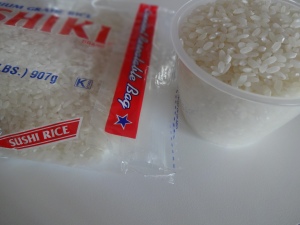
• 1½ rice cooker cup sushi rice (1 rice cooker cup = 180 ml)
• 2 cups water
• 2" x 2" piece of kombu (optional)
• 4 tbsp rice vinegar (no sodium & no sugar)
• 2 tbsp granulated cane sugar
• 1½ tsp kosher salt
instructions:
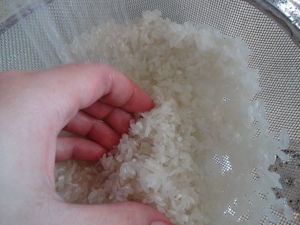
1)  Put rice in a fine mesh strainer and rinse under not-too-cold running water. Gently swish the rice around with your hand. Rinse rice until water runs clear, about 2 minutes. Drain rice very well by shaking the strainer. Leave the rice in the strainer for 30 minutes to 1 hour before cooking.
2)  Transfer rice to your rice cooker, add 2 cups water (just under the number 2 line on the pot), kombu (if using), and turn the setting to "Cook". Once the rice cooker switches to "Warm" setting, set the timer for 15 minutes. Meanwhile, make the vinegar seasoning.
3)  Add vinegar, sugar, and salt in a microwave-safe bowl. Microwave for 30 seconds, then stir until most of the sugar and salt are dissolved. Put the bowl back in the microwave for 15 seconds, then stir well until you don't feel any more grains. Set aside.

◘ tip: Alternatively, you can add vinegar, sugar, and salt in a small saucepan over low heat, stirring until sugar and salt are dissolved. Off the heat.
4)  When the 15-minute timer goes off, transfer cooked rice to a large wooden bowl (or glass bowl) and spread it out. Drizzle the vinegar mixture onto a wooden spatula while moving the spatula back and forth all over the rice to evenly distribute the seasoning.
5)  With one hand, use a slicing motion with the spatula to separate the grains while mixing in the seasoning, while the other hand fans the rice to help dry it. Gently fold in the rice, but don't mash down, and continue the slicing motion to coat the rice grains with the seasoning. Fan the rice the whole time.
◘ tip: Place the bowl over a damp towel to keep it from sliding off.
For the Omelette
ingredients:
• 3 eggs, beaten
• sea salt, to taste
• freshly ground black pepper, to taste
• gochugaru (Korean chili flakes), to taste
• non-stick spray
instructions:
1)  Spray a skillet with non-stick spray and place it over low heat. Pour in the eggs and swirl the skillet to ensure the eggs are laid evenly. Sprinkle the top with salt, pepper, and gochugaru. Cover the skillet and cook for 5 minutes or until the top of the egg is set. Transfer to a plate or work surface/cutting board.
◘ tip: After 3 minutes in to cooking, check the bottom of the eggs to make sure it isn't browning too much. Touch the top to test for wetness; if it's still wet, cook longer with the lid on until the top is dry to the touch. You can also use a rectangular pan (tamago pan) if you have it.
For the Bacon
ingredients:
• 2 bacon strips, preferably thick cut
instructions:
1)  Take bacon out of the fridge while the eggs are cooking to let come to room temperature. Place bacon in a skillet over medium-low heat. Cook on both sides just until cooked through but still pliable (not to a crisp), about 4 minutes per side. Transfer to a paper towel-lined plate to drain excess grease.
Other Ingredients
• furikake
• 5 chives, chopped (some for garnish)
To Assemble:
○ Place the omelette, seasoned side down, on a work surface. Add some rice, spreading it out in a thin layer. Sprinkle furikake all over the top, followed by chives. Place bacon on the edge closest to you; lift that edge and fold it over the bacon. Continue to roll slowly but snugly, not too tight.
○ Run your knife under warm water. Cut the roll into sixths or eighths. Place rolls on a platter and garnish with chopped chives.
◘ note: You can make other types of sushi with the leftover rice. To store sushi rice, place it in a glass container with a lid and refrigerate; use within 3 days.
DSC06312 DSC06313DSC06314 DSC06319DSC06320 DSC06332DSC06337 DSC06339DSC06341 DSC06328DSC06342 DSC06344DSC06595 DSC06607DSC06608 DSC06611DSC06620